Use our easy troubleshooter for guided steps. Start the troubleshooter
To use this article for help, select the letter your help code starts with.
T help codes
You may see one of these help messages while running a System Test after you install your thermostat. The code you see will tell you which part of your system had an issue during the test.
|
|
Troubleshooting steps for each help code are very similar even though the reasons for the code can vary.
Note: There are specific troubleshooting steps for certain errors in some steps.
1. Run the test longer
- The System Test will run for 35 minutes before it stops automatically.
- Select Keep Testing on your thermostat if needed or restart the test by going to Settings
Equipment on your thermostat.
- Select Continue
- Select Keep Testing on your thermostat if needed or restart the test by going to Settings
- Many systems have a built-in delay so it might be 5 minutes or more before your system turns on.
- If you're testing a radiant system, electric baseboard heating, or a system with radiators, it typically takes a while before you can feel the floor baseboard or radiators getting warm. Try waiting up to 30 minutes to see if they warm up.
2. Make sure your system has power
- Check that the breaker switch or fuse that controls power to your system is set to on. System power should be turned off during thermostat installation to help prevent blowing a fuse but it should be turned on for testing.
- Also check the switches for other system components such as fans. They may have a separate switch which also needs to be set to on.
3. Check that your thermostat is wired correctly
Important: Protect yourself, your thermostat and your system. Turn off power to your system and thermostat at the breaker or fuse box before exposing or adjusting any wiring.
- Pull off the thermostat display.
- Check that the wires are inserted correctly in the thermostat.
- Check that each wire is fully inserted into its connector and that every connector with a wire is down as shown.
- Check that each wire has ⅜ inch (6mm) of exposed wire.
- Check that each wire is connected properly to the system board.
- Put the display back on the base and turn the power to your system back on.
- Check if your thermostat is working. If it still doesn’t work, check that your system wires are connected to the right connectors. Use the wiring diagram the app gave you during setup to move the wires to the right connectors.
- Turn off power to your system and thermostat at the breaker or fuse box.
- If you don’t have the wiring diagram, refer to the picture of your thermostat wires that you took when it was installed. If you didn’t take a picture or can’t find it, follow these instructions to access your system’s control board and take a picture of the wires. Use this picture to enter the wires into the app.
In the Nest app
- Open the Nest app.
- Use these steps to add the thermostat to the app to get the wiring diagram.
- If you don’t have other products in the app
- Tap Add product on the home screen and follow the app instructions.
- If you have other products in the Nest app
- Tap Settings
in the top right.
- Tap Settings
- If you don’t have other products in the app
- Select Add product.
- Follow the app instructions. Make sure you choose Start installation even though you’ve already installed your thermostat.
- Follow the app instructions until the app asks you to enter your thermostat wires. Use the picture you took of your old thermostat’s wires or your control board wires as a reference.
- The app will give you a wiring diagram. Move the wires to the right connectors to match the wiring diagram. If you need to move wires, your thermostat may ask you a few questions.
- Important: Make sure the wires have ⅓ to ½ inch (6mm) of copper exposed and that the wire connectors stay all the way down.
- After you have the wiring diagram, you can exit device setup.
In the Home app
- Open the Google Home app
.
- Tap Devices
.
- Tap your thermostat.
- Tap Settings
- Compare the picture of your old thermostat’s wiring to the wires the app shows.
- Tap Update wiring if you need to move the wires to the right connectors. Follow the app instructions.
- Make sure the wires have ⅓ to ½ inch of copper exposed, the wire is fully inserted into the connector, and that the wire connector button stays down.
- Replace the thermostat display and turn your system power back on.
- Turn power to your system back on at the breaker or fuse box.
 in the top right.
  .
. 
- Re-test your system. On your thermostat go to Settings > Equipment. Then select Continue > Test.
If you’ve completed all the troubleshooting steps above and your thermostat still isn’t working correctly, contact a local professional for more help.
4. Steps for specific system types
If you have one of the codes in this table, check your system for the issue listed below then restart the System Test if needed.
If you're not sure which type of system you have, you can check here.
| Help code | Troubleshooting |
|---|---|
|
T06 error Your system has radiators |
Check that the radiator valves are fully open so that hot water can circulate to the radiators. |
|
T07 error You have an electric baseboard system |
Most baseboard systems are high voltage (120 V) and are incompatible with Nest thermostats. 24V baseboard systems are much less common so double check your system voltage. If it's 120 V disconnect the Nest thermostat and reinstall your old one. |
|
You have a heat pump |
If there's a wire (usually orange) in your thermostat's O|B or * O|B connector you have a heat pump. Heat pump systems can heat when they're supposed to cool (or cool when they're supposed to heat) if the O|B wire isn't configured right during thermostat setup. See this article for specific steps to change the setting. |
|
T09 or T08 error You have a dehumidifier or humidifier |
We strongly recommend professional installation for systems with dehumidifiers or humidifiers because of setup complexity. Nest thermostats have one connector ( * or * O|B) for dehumidifiers or humidifiers. But these components often have two wires so a relay must be installed to convert the two wires into one for Nest compatibility. In addition the dehumidifier or humidifier must be configured correctly in the thermostat's Pro Setup menu. |
5. Test your old thermostat again and contact a pro
Make sure the system test is over, and check that your thermostat and system are working.
- If the System Test is still running on your thermostat, select Done on the display.
- Check if your system is working normally and check the thermostat for a code.
- If you see the same code, you should contact a pro to check your system.
- If you see another code, start over to troubleshoot that code.
E help codes
E codes are critical and must be fixed as soon as possible. Your thermostat won't allow you to control heating or cooling, and the message won't go away until the cause has been fixed.
Look at the table below and select your specific help code then follow the troubleshooting steps. You can also contact a pro for other issues (including HVAC).
It's important to protect you, your system, and your thermostat. Turn off the power to your system at the fuse box before exposing or adjusting any wiring.
|
Nest Learning Thermostat
|
Nest Learning Thermostat |
Nest Learning Thermostat
|
Nest Thermostat E
|
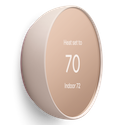
Nest Thermostat
|
||
|---|---|---|---|---|---|---|
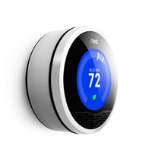 |
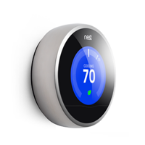 |
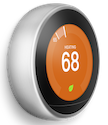 |
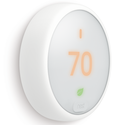 |
 |
||
|
E155 |
||||||
N help codes
Select your help code to go to the troubleshooting steps you need. You can also contact a local professional to help resolve your issue.
| Nest Learning Thermostat 1st gen |
Nest Learning Thermostat |
Nest Learning Thermostat 3rd gen |
Nest Thermostat E | Nest Thermostat |
|---|---|---|---|---|
|
|
|
|
|
TD help codes
| Help code | Troubleshooting | ||
|---|---|---|---|
|
TD001 |
TD005 |
TD006 |
These codes mean your thermostat is having problems connecting to Wi-Fi or to your app. Use the article below to troubleshoot your issue. |
|
TD003 |
TD018 |
TD028 |
These help codes can occur when adding your thermostat to the app. Use the article below to troubleshoot your issue. |
M help codes
Find your help code below, and follow the link to troubleshoot.
W help codes
|
Help code |
Troubleshooting |
|
W1 The Nest thermostat can't continue to connect to |
Your Wi-Fi router may not fully support a Wi-Fi standard known as power saving mode. |
|
W2 Failed to connect. |
Your Wi-Fi router may have security settings enabled that prevent your Nest thermostat from connecting. How to find your Nest product's MAC address and add it to your router's whitelist |
|
W3 Failed to connect. |
Your Wi-Fi router is not providing a network IP address to your Nest thermostat. |
|
W4 Failed to connect. |
The Nest thermostat is connected to your wireless network but not to the Internet. |
|
W5 Failed to connect. |
Your Nest thermostat can't connect to Wi-Fi. |
H help codes
You'll see H help codes if your home has one of the following systems.
- Domestic hot water tank
- OpenTherm system
- Condensing boiler
- District or collective heating
- Fil pilote
Manually turn on heat, if needed
You can manually turn on your heat with the Heat Link while you troubleshoot so you can stay comfortable. If your thermostat controls your domestic hot water tank, your hot water will also turn on.
Press the button on your Heat Link to turn heating on or off while we work on your thermostat. The heating light will turn green to let you know the heat is on.
- Thermostat E - Press the button twice
- 3rd and 2nd gen thermostat - Press the button once
Find your code
Select the help code that you see on your thermostat for specific troubleshooting steps to fix the issue.
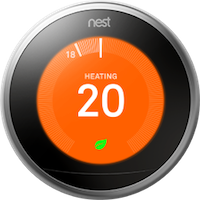
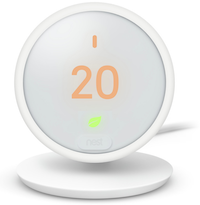
H1, H71, or H151
If you see this code, your thermostat can't connect to your Heat Link to control your heating. In addition, the Heat Link's status light will be yellow when it's disconnected from your thermostat.
- Restart the Heat Link
- Hold down the Heat Link's button until its light turns off. It should take about 20 seconds.
- Release the button and wait for your Heat Link to restart.
- The status light will turn green if it re-connects to your thermostat. If the status light is yellow, continue to step 2.
- Move your thermostat and test the connection
Your thermostat may be a bit too far away from the Heat Link or there may be something interfering with the wireless connection. Check that there isn't anything physically between your Heat Link and thermostat, like a large mirror or refrigerator. Large objects made of metal or other dense materials can block wireless signals.- If your thermostat is on a stand
- Try moving it closer to where your Heat Link is installed.
- Now, check the wireless connection.
- On your thermostat go to Settings > Equipment. Then select Continue > Heat Link > Test.
- If the test fails, move your thermostat again and re-test. Sometimes moving your thermostat a few centimetres can make a big difference.
- If your thermostat is mounted on the wall try moving the Heat Link.
- Before you move the Heat Link, turn off all power to your home at the fuse box.
- Move the Heat Link so it is at least 30 cm away from the boiler or other large metal objects.
- After you move the Heat Link, turn the power to your system back on.
- If your thermostat is on a stand
- Reset the Heat Link to defaults
Thermostat E
Important: When you reset Heat Link for Nest Thermostat E to factory defaults, it will remove Heat Link from the app. You'll need to set up your Heat Link from scratch again.
- Remove your Heat Link from the Nest app. Remove your Heat Link from your account in the app
- From the home screen, tap on the Heat Link
- Tap Settings
- Select Remove Heat Link
- Press and hold Heat Link's button until the status light turns solid yellow (about 15 seconds). Release the button.
- When the factory reset is complete, the status light will pulse blue to let you know.
- Reconnect your Heat Link to the app:
- Remove Heat Link's cover so that you can see the QR code on top of the battery compartment.
- In the app, go to Settings
Add product.
- Follow the on-screen instructions to scan the QR code and add Heat Link back to the app. When asked, tell the app that Heat Link is already installed, which lets you skip the instructions about installing it on your wall.
3rd gen Learning Thermostat
- Press and hold Heat Link's button for about 20 seconds. The Heat Link's status light will turn off, then it will start quickly blinking yellow. Release the button.
- When the factory reset is complete, the Heat Link's status light will pulse blue.
- Normally, a Heat Link should automatically reconnect to your Nest thermostat after you reset it to factory defaults. Wait a few moments and then check your thermostat to confirm.
- If your thermostat asks for a pairing code, look on the bottom of Heat Link for the 6-digit code.
- If your thermostat is showing a code, go back to the beginning of this troubleshooter to troubleshoot that code.
2nd gen Learning Thermostat
- Press and hold Heat Link's button for 20 seconds.
- While you're holding the button, Heat Link's status light will turn off, then it will start quickly blinking green and yellow. Release the button.
- When the factory reset is complete, Heat Link's status light will blink green and yellow.
- Normally, Heat Link should automatically reconnect to your Nest thermostat after you reset it to factory defaults. Wait a few moments and then check your thermostat to confirm.
- If your thermostat asks for a pairing code, look on the bottom of Heat Link for the 6-digit code.
- If your thermostat is showing another code, go back to the beginning of this troubleshooter to troubleshoot that code.
- Remove your Heat Link from the Nest app. Remove your Heat Link from your account in the app
- Stop wireless interference from other electronics
Other electronic devices in your home that use a 2.4 GHz wireless signal may create interference with your Heat Link. This includes devices like cordless phones, baby monitors, microwave ovens, or wireless security cameras.- Try turning off these devices one by one to see if your thermostat and Heat Link are then able to establish a wireless connection.
- If one of these devices is causing interference, try moving it further away from the Heat Link or thermostat if possible and then recheck the connection. Go here to learn about wireless interference.

 Add product.
Contact a Nest Pro
If you're still not able to fix the problem, contact a Nest Pro, who can properly diagnose your heating system and your Nest thermostat.
H2, H72, or H152
You'll see this code if your thermostat lost power. How you troubleshoot this code depends on if your thermostat is on a stand or installed on the wall.
If your thermostat is on a stand
|
Make sure that the Nest power cable is fully inserted into the power plug and that the plug has been pushed all the way into the wall socket. Check that the wall socket is switched on.
|
 |
If your thermostat is on the wall
|
Make sure the thermostat display is completely attached to the base. If it's not, push it down on the base until you hear it click. Try moving the Heat Link.
|
 |
Check the system power
- Check the fuse. It's possible that the fuse controlling power to your system isn't properly seated or is blown. Turn off the power to your system, then check the fuses. Re-seat or replace it as necessary. Refer to the manufacturers manual or website for exact instructions and safety precautions.
- Make sure that the switch is set to on. Sometimes fuse switches can look like they're on, but haven't been flipped on all the way.
- Try flipping the switches that control power to the Heat Link and your thermostat off and then on again.
- You can also check power to the socket that the Nest thermostat is using by plugging in a lamp or other electronic device and turning it on.
Contact a Nest Pro
If you're still not able to fix the problem, contact a local pro, who can properly diagnose your heating system and your Nest thermostat.
H73 or H153
You'll see this code if your thermostat can't detect your system's OpenTherm. How you troubleshoot these codes depends on whether you see it during installation or after installation.
If you see the code during installation
 Pro Setup to change the boiler control setting. Pro Setup to change the boiler control setting. |
 |
If you see the code after installation
While you'll usually see this code during or right after thermostat installation, it can sometimes occur after you've been using your thermostat for a while.
- Check that the power to your boiler hasn't been turned off.
- If the switch controlling power to your boiler is on, but it's not receiving power, contact a local Nest Pro to check your system.
Contact a Nest Pro
If you're still not able to fix the problem, contact a local pro, who can properly diagnose your heating system and your Nest thermostat.
H155
An H155 help message on your thermostat says 'Your Heat Link went offline when the batteries were low'.
- Pull off the Heat Link cover and replace the batteries with new L91 Energiser Lithium AA batteries.
- Important: Do not use regular alkaline batteries.
- The Heat Link should automatically reconnect to your thermostat when new batteries are installed.
Contact a Nest Pro
If you're still not able to fix the problem, contact a local pro, who can properly diagnose your heating system and your Nest thermostat.
H156
Your system is wired for and compatible with OpenTherm, but the OpenTherm option wasn't selected during setup.
On your thermostat, go to Settings 

Contact Nest support
If you followed the steps above and you still see the message on your thermostat, contact support for more help.
H157
You'll see this code if you've removed the Heat Link from the app.
- If your Heat Link can't be connected to the app, reset it to factory defaults.
- Reconnect the Heat Link to your thermostat with the app.
- Go to Settings
Add product and follow the instructions to add it to the app.
- When prompted, enter the pairing code from the Heat Link in the thermostat display.
- Go to Settings
- In some cases, you may need to enter the Heat Link's pairing code into your Nest thermostat.

 Add product and follow the instructions to add it to the app.
Note: To find the code, pull off the Heat Link's cover and look for the code near the left screw hole. It's a combination of six letters and numbers.
Contact Nest support
If you followed the steps above and you still see the message on your thermostat, contact support for more help.
H158
You'll see this code if you've removed the Heat Link from your account, and your thermostat disconnected from the app. Reset your thermostat to factory default, then reconnect it and the Heat Link to the app.
- Press your thermostat ring to open the Quick View menu.
- Choose Settings
.
- Turn the ring to Reset and press to select.
- Select All Settings to reset your thermostat to factory settings.
- Begin thermostat setup with the app to connect it and your Heat Link to your account again.
- Tap the Settings
icon on the app home screen.
- Select Add product
to start thermostat setup.
- Tap the Settings
 .
. icon on the app home screen.
 to start thermostat setup.
Contact Nest support
If you followed the steps above and you still see the message on your thermostat, contact support for more help.
TH help codes
TH codes cover troubleshooting issues related to Wi-Fi and Thread Network (a low-power wireless mesh network that your Google Nest devices use to communicate with each other).
Select your help code to go to the troubleshooting steps you need.
Troubleshoot TH003
You may see this code when you're setting up your thermostat.
Go through each step in this list in order. After each step try to add your thermostat to the app. If you're still having trouble, go to the next step.
- Restart your phone.
- Restart any other Google Nest devices set up in your home.
- If you still see the code, your other devices may have become unresponsive, gone offline, or another issue may have occurred.
- Reset your other Google Nest devices to factory default settings, then add them back to your home in the app.
- Add your thermostat to the app.
If you followed the steps above and you still see the message on your thermostat, contact Google Nest customer support for more help.
Troubleshoot TH004
You may see these codes when you're setting up your thermostat.
Go through each step in this list in order. After each step try to set up your thermostat in the app. If you're still having trouble, go to the next step.
- Check that your thermostat is awake by pressing or tapping the edge.
- Check that your device's Bluetooth is on.
- If it's on, turn Bluetooth off and then on again to reset the connection.
- Put your phone into airplane mode, then turn on Bluetooth and Wi-Fi.
- Quit the Nest or Home app, then open it again.
- Turn your phone off and then on again.
- Move your other Google Nest devices closer to your thermostat.
- Restart your router.
If you followed the steps above and you still see the message on your thermostat, contact Google Nest customer support for more help.
Troubleshoot TH008
You may see these codes when you're setting up your thermostat.
Go through each step in this list in order. After each step try to set up your thermostat in the app. If you're still having trouble, go on to the next step.
- Move your other Google Nest devices closer to your thermostat.
- Restart your router.
- Check that IPv6 is turned on for your modem.
If you followed the steps above and you still see the message on your thermostat, contact Google Nest customer support for more help.
Troubleshoot TH009
You may see this code if you added your thermostat to your home in the app, but haven't finished setting up your thermostat.
Go through each step in this list in order. After each step try to add your thermostat to the app. If you're still having trouble, go to the next step.
- Restart your modem and router.
- Try moving your other Google Nest devices closer to your router.
- Check that your network settings are optimized for Google Nest devices.
- If you still see the code, your other devices may have become unresponsive, gone offline, or another issue may have occurred.
- Reset your other Google Nest devices to factory default settings, then add them back to your home in the app.
- Add your thermostat to the app.
If you followed the steps above and you still see the message on your thermostat, contact Google Nest customer support for more help.
Troubleshoot TH010 and TH011
You may see this code if you added your thermostat to your home in the app, but haven't finished setting up your thermostat.
Go through each step in this list in order. After each step try to add your thermostat to the app. If you're still having trouble, go to the next step.
- Check that your phone's Bluetooth is on.
- If it's on, turn Bluetooth off and then on again to reset the connection.
- Put your phone into airplane mode, then check that Bluetooth is on and that you're connected to Wi-FI.
- Turn your phone off and then on again.
- Restart your modem and router.
- Try to use a different device, such as another phone.
- Move your other Google Nest devices closer to the modem and router.
- If you still see the code, your other devices may have become unresponsive, gone offline, or another issue may have occurred.
- Reset your other Google Nest devices to factory default settings, then add them back to your home in the app.
- Add your thermostat to the app.
If you followed the steps above and you still see the message on your thermostat, contact Google Nest customer support for more help.
Troubleshoot TH013 and TH026
You may see these codes when you're setting up your thermostat.
Go through each step in this list in order. After each step try to set up your thermostat in the app. If you're still having trouble, go to the next step.
- Restart your phone.
- Use the app to check that your other Google Nest devices are connected to Wi-Fi and working correctly. The app will let you know if your devices are offline.
- Move your other Google Nest devices closer to your thermostat.
- Restart your other Google Nest devices.
- Put your phone into airplane mode, then turn on Bluetooth and Wi-Fi.
- If you have another phone available, use that phone to add the thermostat to your home in the app.
- Restart your modem and router.
- Switch your Wi-Fi connection to a mobile hotspot.
- If you still see the code, your other devices may have become unresponsive, gone offline, or another issue may have occurred.
- Reset your other Google Nest devices to factory default settings, then add them back to your home in the app.
- Then add your thermostat to the app.
If you followed the steps above and you still see the message on your thermostat, contact Google Nest customer support for more help.
Troubleshoot TH014, TH015, and TH016
You may see these codes when you're setting up your thermostat.
Go through each step in this list in order. After each step try to set up your thermostat in the app. If you're still having trouble, go on to the next step.
- Check that your thermostat is awake by pressing the thermostat's ring.
- Check that your device's Bluetooth is on.
- If it's on, turn Bluetooth off and then on again to reset the connection.
- Put your phone into airplane mode, then turn on Bluetooth and Wi-Fi.
- Turn your phone off and then on again.
- Move your other Google Nest devices closer to your thermostat.
- Restart your modem and router.
- If you still see the code, your other devices may have become unresponsive, gone offline, or another issue may have occurred.
- Reset your other Google Nest devices to factory default settings, then add them back to your home in the app.
- Then add your thermostat to the app.
If you followed the steps above and you still see the message on your thermostat, contact Google Nest customer support for more help.
Troubleshoot TH017, TH018, and TH019
You may see these codes when you're setting up your thermostat.
Go through each step in this list in order. After each step try to set up your thermostat in the app. If you're still having trouble, go on to the next step.
- Check that your thermostat is awake by pressing or tapping the edge.
- If you still see the code, your other devices may have become unresponsive, gone offline, or another issue may have occurred.
- Reset your other Google Nest devices to factory default settings, then add them back to your home in the app.
- Then add your thermostat to the app.
If you followed the steps above and you still see the message on your thermostat, contact Google Nest customer support for more help.
Restart or reset Google Nest devices
Find your product below and use the appropriate article to either restart or reset other Nest devices based on the instructions you read above.
- Cameras and doorbells: Restart or factory reset Nest camera or doorbell
- Thermostats:
- Wifi:
- Protect: How to reset Nest Protect and erase all your personal settings
- Speakers and displays:
What your help code means
E help codes
This table shows you which wire or wires you'll need to troubleshoot.
|
Help code |
How to troubleshoot |
|
Common wire ("C" wire) is required. |
Troubleshoot C wire |
|
No power wires detected. Rc or Rh wire required. |
Troubleshoot power |
|
No power to Rc wire detected. |
Troubleshoot power |
|
No power to Rh wire detected. |
Troubleshoot power |
|
No heating or cooling detected. W1 or Y1 wire is required. |
Troubleshoot wiring |
|
Too many wires detected. Please remove at least one of O/B, W1, Y1 or AUX. |
Troubleshoot wiring |
|
Y1 wire not detected. A heat pump requires a Y1wire. |
Troubleshoot wiring |
|
Additional wire(s) required. W2/AUX detected by itself. |
Troubleshoot wiring |
|
No power to C wire detected. |
Troubleshoot power |
|
E10, E30, E66, E80, E116, E160, E196 and E296 No power to Y1 wire detected (cold weather shutoff). |
Troubleshoot Y wire |
|
Heat pump wire O/B detected. No heat pump system present. |
Troubleshoot wiring |
|
No power to W1 wire detected. |
Troubleshoot power |
|
E13, E33, E36, E37, E38, E83, E86, E87 and E88 A heat pump can have at most one auxiliary heat wire. |
Troubleshoot wiring |
|
Dual fuel requires an alternate heat wire. |
Troubleshoot wiring |
|
Dual fuel can have at most two alternate heat wires. |
Troubleshoot wiring |
|
Y2 wire without Y1 wire. |
Troubleshoot wiring |
|
W3 wire without W2/AUX to wire. |
Troubleshoot wiring |
|
E wire without O/B wire. |
Troubleshoot wiring |
|
E52, E53, E54, E55, E56, E57, E58, E102, E103, E104, E105, E106, E107, E108, E182, E183 and E188 The Nest thermostat has an overcurrent error. |
Troubleshoot wiring |
|
G2 detected. G1 wire is also required. |
Troubleshoot wiring |
|
G2 wire detected. Remove W2/AUX wire. |
Troubleshoot wiring |
|
G2 wire detected. Remove E wire. |
Troubleshoot wiring |
|
G wire detected. G1 and G2 also required. |
Troubleshoot wiring |
|
G2 and O/B wire conflict. |
Troubleshoot wiring |
|
Y1 wire not detected. |
Troubleshoot wiring |
|
W1 wire not detected. |
Troubleshoot wiring |
|
Check G wire |
Troubleshoot wiring |
|
R wire not detected |
Troubleshoot wiring |
|
No power to R wire detected. |
Troubleshoot power |
|
Heat pump requires Y1 wire |
Troubleshoot wires in Home app |
|
W2 wire requires W1 |
Troubleshoot wires in Home app |
|
No power to Y1 |
Troubleshoot power |
|
Dual fuel requires an alternate heat wire. |
Troubleshoot wires in Home app |
|
Y2 wire requires a Y1 wire |
Troubleshoot wires in Home app |
|
R wire is required |
Troubleshoot wires in Home app |
|
No power to Y1 wire detected (cold weather shutoff). |
Troubleshoot Y wire |
|
C wire or Y1 wire required |
Troubleshoot C wire |
|
No system power |
Troubleshoot power |
|
Contact support |
Contact support |
N codes
This table shows you which wire or wires you'll need to troubleshoot.
|
Help code |
How to troubleshoot |
| N1, N21 and N71
Power wire Rc detected. Not connected to equipment. |
Troubleshoot low power |
| N2, N22 and N72
Power wire Rh detected. Not connected to equipment. |
Troubleshoot low power |
| N3, N23, N73 and N153
No power to W1 wire detected. |
Troubleshoot low power |
| N4, N24, N74 and N154
No power to Y1 wire detected. |
Troubleshoot low power |
| N5, N25 and N75
No power to W2/AUX wire detected. |
Troubleshoot low power |
| N6, N26, N76 and N156
No power to G wire detected. |
Troubleshoot low power |
| N7, N27 and N77
No power to O/B wire detected. |
Troubleshoot low power |
| N28 and N78
No power to Y2 wire detected. |
Troubleshoot low power |
| N29, N79 and N159
No power to wire detected. |
Troubleshoot low power |
|
No power to W1 |
Troubleshoot power |
|
No power to Y1 |
Troubleshoot Y wire |
|
No power to G |
Troubleshoot power |
|
No power to *|OB |
Troubleshoot power |
|
A C wire or Nest Power Connector is recommended for your thermostat |
Troubleshoot C wire |
|
Low power to C wire |
Troubleshoot C wire |
|
|
Troubleshooting steps
Your thermostat needs a C wire
These steps cover the following help codes: E1, E297, N261, N260
You might see this help code for one of the reasons below:
- The C wire isn't providing enough power to your thermostat.
- Your thermostat might need a C wire or the Nest Power Connector to provide it with dedicated power.
- If you're installing the Nest Power Connector and you get an E297 help code, your thermostat needs an update. On the thermostat screen, select Settings
Software
- If you've already installed the Nest Power Connector, you might need to update the wiring info in the app.
Home app
- Open the Home app
.
- Tap and hold your device's tile.
- At the top right, tap Settings
- Update any incorrect wiring information.
Nest app
- Open the Nest app
.
- Tap Thermostat
- Update any incorrect wiring information.
- Open the Home app

 Software
  .
.
1. Check your thermostat for a C wire
You can check your thermostat or your system for a C wire yourself, or contact a pro to check for you.
- Turn off all power to your home at the breaker box, fuse box or system switch.
- Pull off the Nest thermostat display and check the C connector.
- If there isn't a wire, continue to "Check your system for a spare wire"
- If there is a wire in the C connector, check that the wire has the C wire label, then make sure it's in all the way and the connector button is down.
- You may need to strip the wire ends. There should be ⅓ to ½ inch of straight copper wire exposed.
- Put the thermostat display back on and press until it clicks into place. Then turn power to your system back on.
2. Check your system for a spare wire
Your system might have a spare wire that's not connected to your thermostat that you may be able to use as a C wire. If there isn't a spare wire, you'll need to contact a pro to have one installed.
Important: These are advanced troubleshooting steps. Your HVAC system uses high voltage, which can be dangerous. If you need to open your HVAC system, be careful not to touch any of the components unless expressly instructed to do so.
If you got pro installation when you first installed your thermostat, you may want to contact your installer or find a local pro if you need any help.- Make sure to turn off the power to your HVAC system at the breaker box, fuse box, or system switch, if it isn't off already.
- If you found a spare wire, note the color of the wire.
- On your HVAC system, look for a removable access panel. It may have a handle or latch, or you may need to remove some screws.
- Be careful not to touch any of the components inside your system except for the system wires. Some HVAC equipment has electrical components that store a charge like a battery.
- Check the system board's C terminal. If there's no wire in it, look for the spare wire you found on the thermostat end and connect it to the board's C terminal.
- Replace the access panel.
- At your thermostat, connect the spare wire to the C connector. Make sure it's in all the way and the connector button is down.
- Press the display onto the base until it clicks into place and turn your system power back on.
Low power to thermostat
These steps cover the following help codes: N1, N21, N71, N2, N22, N72, N3, N23, N73, N153, N4, N24, N74, N15, N5, N25, N75, N6, N26, N76, N156, N7, N27, N77, N28, N78, N29, N79, N159, N261
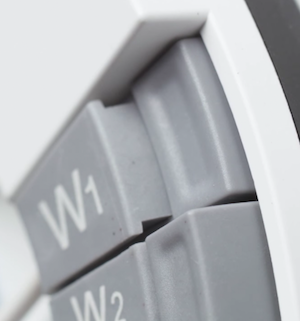
You'll see this code if one of the wires in your thermostat is receiving power, but it's less power than expected.
|
 |
If you still see the code on your thermostat, but your system is running normally, you can dismiss the message and continue to use your thermostat. The message shouldn't pop up again after you dismiss it, however you may want to contact a pro to take a look at your system.
If you’ve completed all the troubleshooting steps above and your thermostat still isn’t working correctly, contact a local professional for more help.
Your HVAC system needs maintenance
These steps cover the following help codes: M6
If you see this code, that means there is a problem with your HVAC system. Contact a pro to service your system and fix this issue.
If you’ve completed all the troubleshooting steps above and your thermostat still isn’t working correctly, contact a local professional for more help.
Check power to your Y wire
These steps cover the following help codes: E10, E30, E66, E80, E116, E160, E196, E296, M13, N254, and N262.
You'll see this code if your air conditioner has tripped a safety cut-out switch that prevents your air conditioner from turning on in very cold weather, or your system might need maintenance.
Go to Troubleshoot E10, E30, E66, E80, E116, E160, E196, M13, and N254 help codes to troubleshoot this issue.
Check your system power or wires
1. Check the system power
First, make sure the power to your system is on. The power switch will usually be in your breaker box or fuse box, but in some homes it will look like a light switch near the heating or cooling equipment.
- There may be a single switch, or two switches: one for heating and one for cooling. Make sure the power is on for both then check your thermostat.
- After you check the power, go to your thermostat and check if it's working.
2. Check the thermostat wires
Important: Protect yourself and your thermostat and your system. Turn off power to your system and thermostat at the breaker or fuse box before exposing or adjusting any wiring.
- Pull off the thermostat display.
- Check that the wires are inserted correctly in the thermostat.
- Check that each wire is fully inserted into its connector and that every connector with a wire is down as shown.
- Check that each wire has ⅜ inch (6mm) of exposed wire.
- Turn the power to your system back on and check to see if your thermostat is working.
- Check that each wire is connected properly to the system board.
1. Check the system power
First, make sure the power to your system is on. The power switch will usually be in your breaker box or fuse box, but in some homes it will look like a light switch near the heating or cooling equipment.
- There may be a single switch, or two switches: one for heating and one for cooling. Make sure the power is on for both then check your thermostat.
- After you check the power, go to your thermostat and check if it's working.
2. Check the thermostat wires
Next, check that your system's wires are in the right connectors.
Important: Protect yourself, your thermostat and your system. Turn off power to your system and thermostat at the breaker or fuse box before exposing or adjusting any wiring.
- Pull off the thermostat display.
- Check that the wires are inserted correctly in the thermostat.
- Check that each wire is fully inserted into its connector and that every connector with a wire is down as shown.
- Check that each wire has ⅜ inch (6mm) of exposed wire.
- Check that each wire is connected properly to the system board.
- Put the display back on the base and turn the power to your system back on.
- Check if your thermostat is working. If it still doesn’t work, check that your system wires are connected to the right connectors. Use the wiring diagram the app gave you during setup to move the wires to the right connectors.
- Turn off power to your system and thermostat at the breaker or fuse box.
- If you don’t have the wiring diagram, refer to the picture of your thermostat wires that you took when it was installed. If you didn’t take a picture or can’t find it, follow these instructions to access your system’s control board and take a picture of the wires. Use this picture to enter the wires into the app.
In the Nest app
- Open the Nest app.
- Use these steps to add the thermostat to the app to get the wiring diagram.
- If you don’t have other products in the app
- Tap Add product on the home screen and follow the app instructions.
- If you have other products in the Nest app
- Tap Settings
- Tap Settings
- If you don’t have other products in the app
- Select Add product.
- Follow the app instructions. Make sure you choose Start installation even though you’ve already installed your thermostat.
- Follow the app instructions until the app asks you to enter your thermostat wires. Use the picture you took of your old thermostat’s wires or your control board wires as a reference.
- The app will give you a wiring diagram. Move the wires to the right connectors to match the wiring diagram. If you need to move wires, your thermostat may ask you a few questions.
- Important: Make sure the wires have ⅓ to ½ inch (6mm) of copper exposed and that the wire connectors stay all the way down.
- After you have the wiring diagram, you can exit device setup.
In the Home app
- Open the Google Home app
- Tap Devices
- Tap your thermostat.
- Tap Settings
- Compare the picture of your old thermostat’s wiring to the wires the app shows.
- Tap Update wiring if you need to move the wires to the right connectors. Follow the app instructions.
- Make sure the wires have ⅓ to ½ inch of copper exposed, the wire is fully inserted into the connector, and that the wire connector button stays down.
- Replace the thermostat display and turn your system power back on.
- Turn power to your system back on at the breaker or fuse box.
Check wire configuration in the Home app
These steps cover the following help codes: E255, E257, E258 E264, E269, E294
If you didn't see a code, your thermostat will show you a link to let you know which wire you need to check. For example, if you see "g.co/nest/needWY" you need to check your W or Y wire.
You'll see this code if the wires in your thermostat weren't configured properly in the Home app. You'll need to reset your thermostat to the factory default and add it back to the Home app.
Reconfigure a G,Y, C, or the */O|B wire
- Open the Google Home app
- Tap Devices
- Tap your thermostat.
- Open Settings
.
- Select Thermostat.
- Tap Wiring. Here you’ll see the current configuration of your thermostat’s wires.
- Tap Update Wiring and read through the info on screen before going to the next step.
- Follow the steps in the app to update your thermostat’s wires.
- Pay special attention to any instructions regarding how to handle your system wires or turning your system power off or on.
- After you’ve updated your wiring, test your system to make sure that it's working correctly.
Reconfigure a W or R wire
- Open the Google Home app
- Tap Devices
- Tap your thermostat.
- Open Settings
- Tap Remove device
- On your thermostat, tap on the right side to open the menu.
- Swipe to Settings and tap to open.
- Scroll to Factory reset.
- Choose Reset and tap.
- Select Yes and tap.
Next, add your thermostat back to the Home app. Tap Add + at the top left of the home screen and follow the instructions on screen. Pay extra attention to the instructions when you reenter your wiring info.
If it's still not working, check that your system wires are connected to the right connectors. Use the wiring diagram the app gave you during setup to move the wires to the right connectors.
If you don't have the wiring diagram, refer to the picture of your thermostat wires that you took when it was installed. If you didn't take a picture or can't find it, follow these instructions to access your system's control board and take a picture of the wires. Use this picture to enter the wires into the app.
- Open the Google Home app
.
- Tap Devices
.
- Tap Set up device and follow the app instructions until you get to the wiring step.
- Use the picture of your old thermostat's wiring to enter the wires into the app.
- Move the wires to the right connectors to match the wiring diagram.
- Make sure you have turned off power to your system at the breaker box, fuse box or system switch before you move the wires.
- Make sure the wires have ⅓ to ½ inch of copper exposed, the wire is fully inserted into the connector, and that the wire connector button stays down.
- Replace the thermostat display and turn your system power back on.
- Turn power to your system back on at the breaker or fuse box.
 .
.Hot weather troubleshooting
These steps cover the following help codes: E3, E4, E23, E24, E73, E74 or E195
If your Nest thermostat suddenly started showing one of these codes during the hot summer months, visit the following link to learn how to help fix it:
Troubleshoot Matter issues
These steps cover the following help codes: M26
A M26 error means that your Nest Thermostat can't connect to a 3rd party app that supports Matter-enabled devices. There are a few reasons this might have happened.
- Your thermostat's battery is too low
- The Wi-Fi is unavailable
- Your thermostat wasn't first added to the Google Home app
- Your thermostat is already paired to the maximum number of 3rd party apps
- Your thermostat shows a "Matter linking is currently unavailable" messages
Battery is low
Replace the thermostat's battery using the instructions below, then try to connect to the Matter supported app again.
Important: Use only high-quality 1.5 V AAA alkaline batteries from a known manufacturer.
- Pull the thermostat display off the base.
- Remove the old batteries from the back of the thermostat display.
- Insert the 2 new AAA alkaline batteries.
- Push the thermostat display back onto the base until it clicks into place.
Wi-Fi unavailable
Use the Troubleshoot Wi-Fi and connection issues for Nest products article to troubleshoot your thermostat's Wi-Fi issue. Then try to connect to the Matter supported app again.
Your thermostat isn't paired to the Google Home app
The thermostat can't connect to a Matter supported app unless you've added it to your account in the Home app first. Use the instructions in Get started with your Nest Thermostat to add it to the Home app and then try to connect to the Matter app again.
Your thermostat is already paired to the maximum number of 3rd-party Matter supported apps
Your thermostat can connect to a maximum of 5 matter supported apps. Review the apps connected to your thermostat. If there are any you no longer use, remove it and try to add the new app.
"Matter linking is currently unavailable" message
You might see a message on your thermostat that says "Matter linking is currently unavailable for this device." First, wait a while and try to connect to the Matter app again. If you still can't connect, try the steps below.
- Restart the thermostat.
- Then check that the app is connected to Wi-Fi and the Nest server
- Open the Home app and check that your thermostat is there and you can control it from the app.
- If it's not there, wait a few minutes and check again.
- If it's still not there, check your Wi-Fi connection.
- Tap the right side of the thermostat to wake it up.
- Open Settings > Network > Nest server. It should say "Connected, Can control the thermostat from the app".
- If the thermostat says it's not connected, wait a while and try again.
- Open the Home app and check that your thermostat is there and you can control it from the app.
If you've performed all these steps and you still can't pair your thermostat to a Matter app, you might need to perform a factory reset on your thermostat and add it back to the Home app. Then try to connect to the Matter supported app again.
Contact support
These steps cover the following help codes: E299, M24
You'll need to contact Google Nest customer support to help resolve this issue.
- Have the help code and your thermostat's serial number ready to give to the support agent.
- To find your thermostat's serial number, pull the display off the base and flip it over. The serial number is above the QR code on the back of the display.